

By James di Properzio
Special to Vibrant Life
I am one of many people I know who were told they would be dead within a year—over eight years ago now.
I didn’t disagree with the doctors about the treatment they proposed, just about the prognosis.
Today I consider myself fully recovered, and the world’s only expert in my rare diagnosis told me that after eight years, it never recurs.
He also said that full recovery today is no longer unusual—unlike when I was diagnosed.
Medical decisions are messy
Medical decisions are some of the messiest choices we need to make. They’re always a gamble. That’s why doctors can advise us, but in the end the choices must always be ours.
Medical science changes so fast that the half-life of a piece of scientific information in medicine, which used to be measured in years, is now measured in months in many specialties. That’s a good thing: it means knowledge is changing and advancing. We should all be humble about the current consensus, and open-minded about what we will learn in the future.
Science isn’t a set of eternal facts that will be right forever. It’s the process of making the best model we can to understand how things work with the information we have right now. Then the scientific process constantly tries to improve that model.
You choose your quality of life
Medical decisions aren’t just about science, though: they are about your life. You must have the right to make decisions about how you want to live, not just how long. We all need to learn to consciously make personal decisions about our health.
If a treatment will prolong your life, but with a quality of life you don’t want, you can wisely turn it down.
If a treatment has only worked in a small number of cases, but you think it’s worth a try—you get to decide about your own life. Make your decision with all the best information you can find. Educate yourself, think it through for yourself. Listen to medical advice with curiosity: you don’t necessarily need to take the advice, but you can always take it into account.
If you can’t make your own choices for your body, there is no freedom. If you don’t own your body, you aren’t free.
Freedom is self-determination
Freedom is self-determination, at every level, from your body and mind, to what you express, to the self-determination of a country, decided democratically and protected by a Constitution.
What medical treatments you choose, whether medically recommended and approved or not, are what you decide to do with your body. In a free country, there should be no question of any treatment being coerced on you, or of a treatment you have chosen for yourself being withheld from you.
Just because your state or country elects officials by popular vote, who then mandate health choices, doesn’t mean that there isn’t room for you to practice your own choices freely when they contradict the majority.
When what most people want overrules your personal health choice, that is Tyranny of the Majority, and it’s one of the things the framers wrote the Constitution to prevent.
Stand up for freedom of those you disagree with
Rights and freedoms aren’t things you can pick and choose piecemeal; you have to stand up for freedom itself, for all.
If you disagree with the broader national line on a health issue, don’t just fight to prove yourself right; fight for the freedom to have dissenting opinions.
Everybody thinks they’re right without realizing that there is an infinity of diverse ideas. Therefore, the freedom to think for yourself and hold an “unpopular” opinion must be a universal human right.
Make your own medical decisions. If you’re not thinking for yourself, you’re not free.
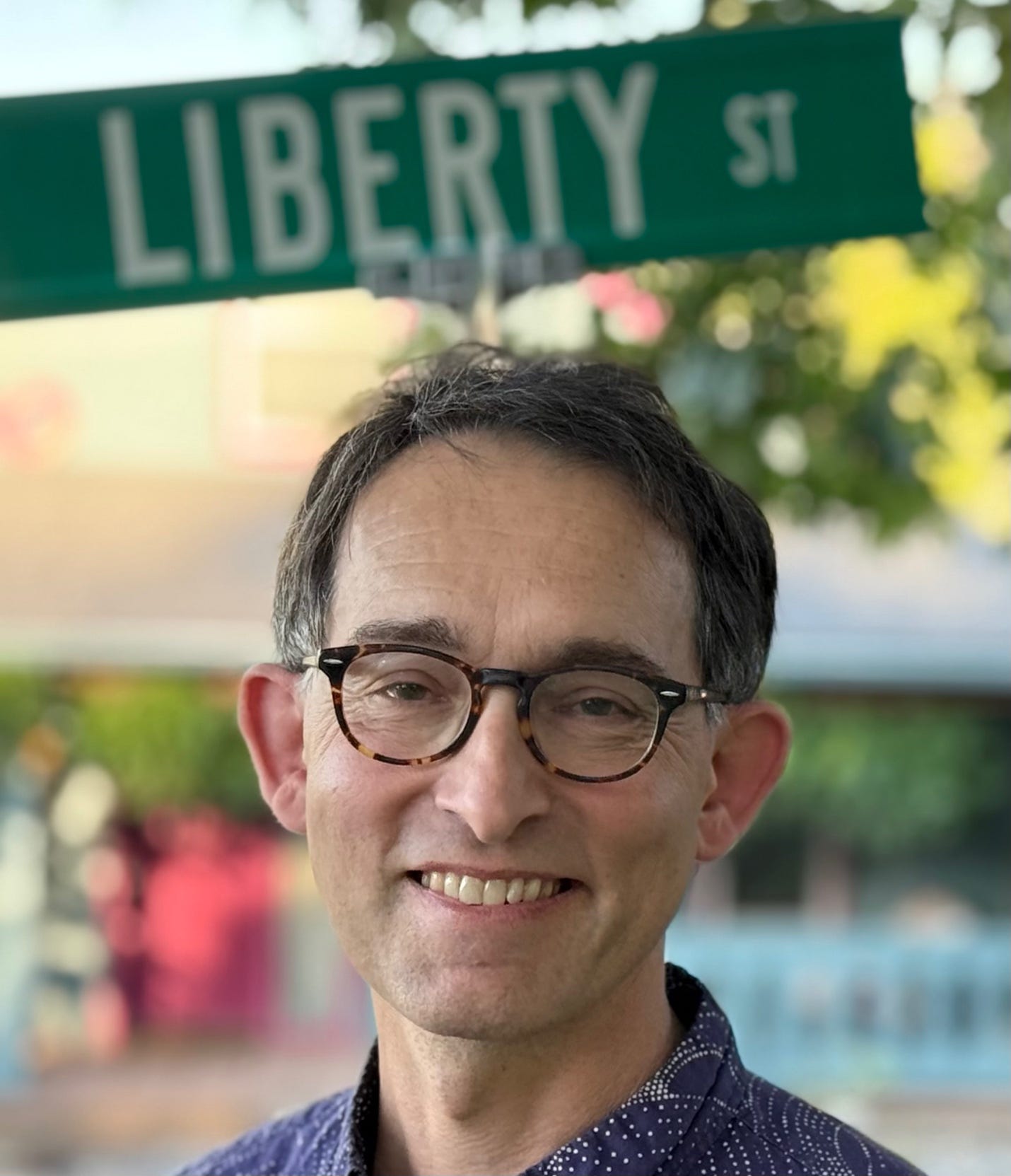
About the author
James di Properzio is a writer, editor, and graduate of St. John’s college. His recently launched Substack, Liberty Street, argues that the idea that freedom is self-determination is the perfect starting point for discussion. He argues that we don’t need to agree with each other; in fact, it’s better when we all have our ideas. What we do need is to express our ideas in a civil discourse that respects our fellow citizens. The courage to have a real conversation—and to step out of the echo chamber—is what is needed to keep a free country fully functional, which is not where we have been during the 21st century. Subscribe to Liberty Street to be part of the conversation.
Jennifer, I am overjoyed at your healing! As I’ve always said, doctors don’t know everything! Most of us know our bodies intimately, and know when something is not quite right. Our Intuition is part of our “body” and I believe, one of the soul’s greatest gifts.
I found out two days ago that I am cancer free (kidney cancer in February)! I know you know the feeling that brings.
Thank you for sharing your experiences! Sometimes people just want to know they aren’t alone. May God and His angels be with you and protect you! 🌞🕊️🕊️🕊️❤️
The basic premise of personal freedom sounds like common sense. Unfortunately, as our societies grow and change, the idea that your individual choices are as important as those of the whole village is at risk. (For context, I'm in Australia, where we don't have the same constitutional protections on freedom of expression.) In the wake of the horrific pandemic response mandates and 'public health' policies, the division of society between those who still believe those actions were necessary, reasonable, and saved millions, and those who never (or now) viewed them as necessary or effective, is becoming greater. Just this week a friend, who became more wary after her husband's cardiac event post-jab, said that we need to still follow public health directives in a health crisis. I am so weary of trying to explain my position.