
Most of us in the natural health world understand that it’s important to do everything we can to mitigate our family’s exposure to environmental toxins and maximize exposure to nutrient-dense nourishing food.
Most have read—or at least heard of—Michael Pollen’s work. He’s the food journalist who writes about the importance of eating real whole fresh pesticide and herbicide-free food.
We may not always succeed. But we do try to avoid what Pollan calls “edible food-like substances” and instead eat real, wholesome, healthy food.
None of us is perfect but we all do our best—with the goal being to feed ourselves and our children lots of fresh deliciousness and avoid ultra-processed crap-o-la.
Why? Because eating real food helps your body and your brain.
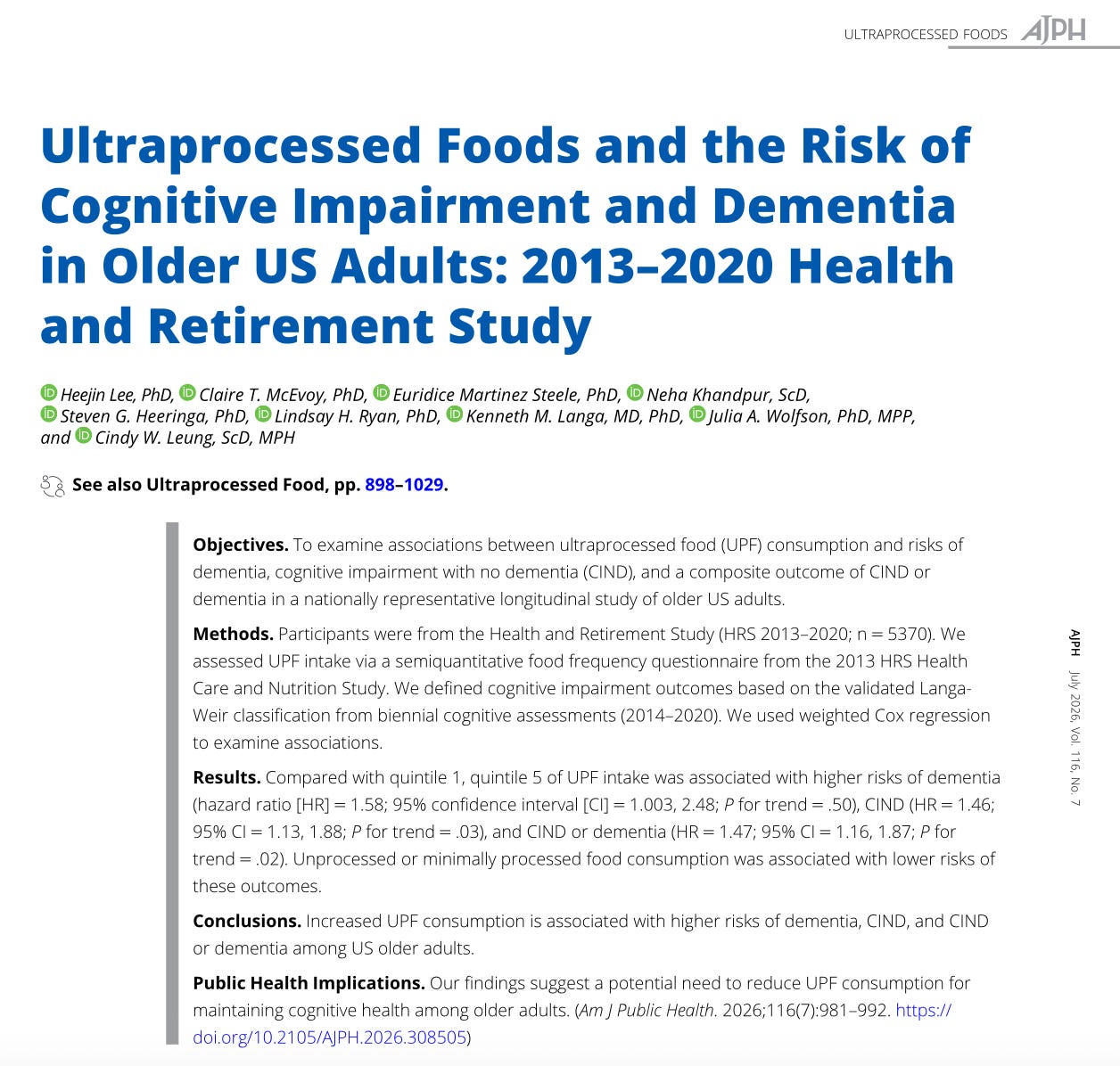
And because we’ve read—or we’re aware of—the research that shows that ultra-processed food is linked to early death, an elevated risk of dementia, stomach and bowel issues, infertility in both men and women, and several kinds of cancer.
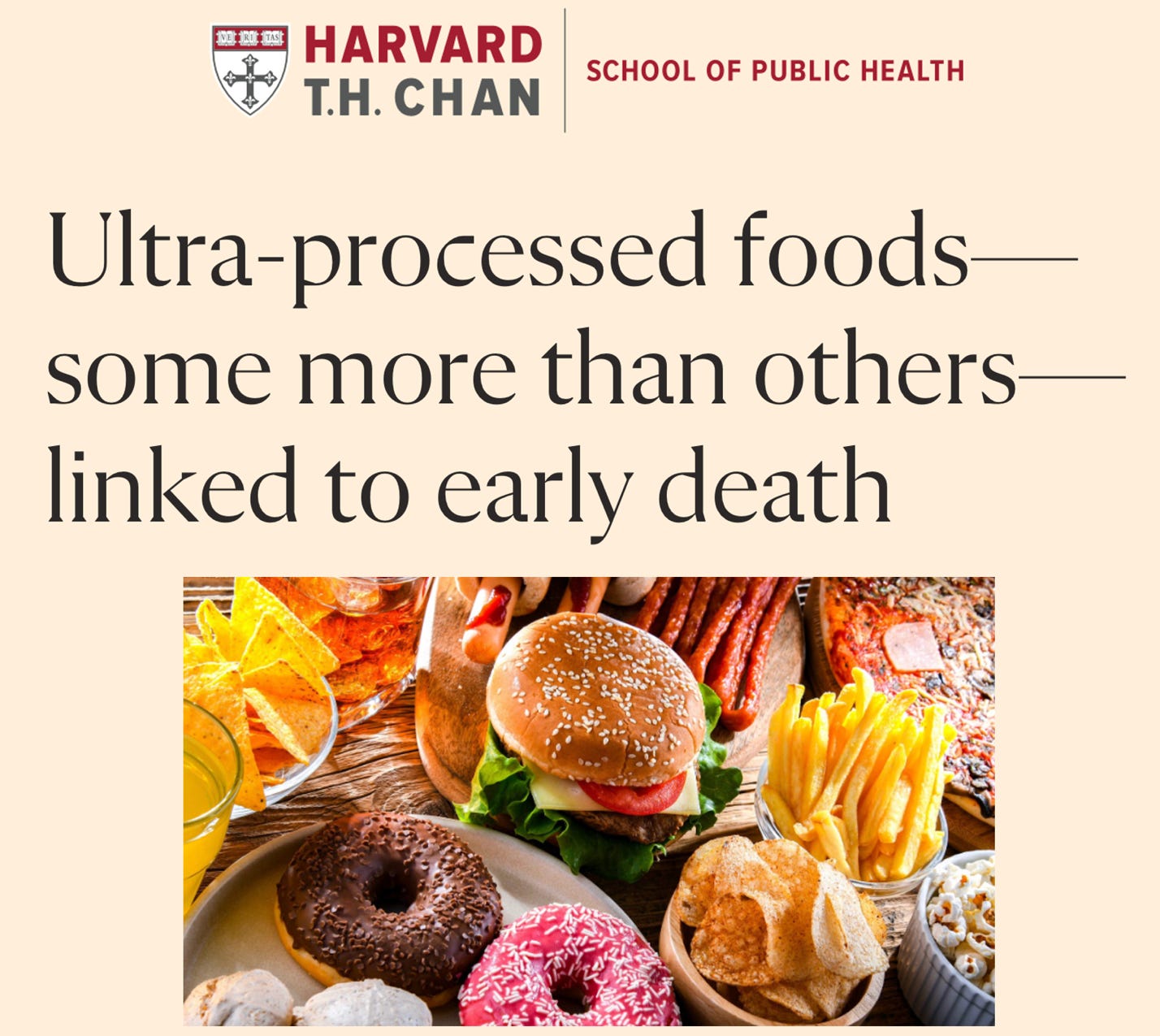
But since we are all human and humans aren’t always rational, we don’t think to apply the same food rules to our pets.
Even people who’ve spent decades researching health issues caused by the one-two punch of overexposure to environmental toxins and the underexposure to nutrient-rich food often don’t think about feeding their dogs and cats ultra-processed additive-laden edible food-like substances.
It’s just what pet owners do.
Kibble is king
Kibble and canned food are easy, convenient, and shelf-stable. Open the bag of kibble, pour it into the bowl, and watch your dogs wolf it all down with alacrity.
They love it.
Canned food too.
Yummy.
And therein lies the problem.
We’ve all been duped by the relentless advertising; the fancy packaging; the gorgeous photographs; and all the promises of “balanced nutrition” and “expert formulated” and “Pro Plan” on the bag.
We Americans, even those of us who try to live more intentional lives, have been conditioned by the cult of convenience and the deep pockets of Big Ag and Big Food, as well as by the $65 billionpet food industry.
So it’s no real surprise that we’re all in the habit of feeding our dogs and cats ultra-processed edible food-like substances.
A habit is something you do without thinking.
But kibble isn’t food.
Ultra-processed canned dog and cat “food” isn’t food either.
Every formulation is different but both kinds of pet food are highly processed, subjected to high heat, and usually laden with artificial ingredients (including emulsifiers, thickeners, mold-inhibitors, artificial colors, synthetic vitamins, and so-called “natural” flavors that are often proprietary blends made in a laboratory).
The kibble package may announce that the pellets inside it are “grain free.”
This kind of pet food may contain certified organic ingredients.
And it may also be ultra expensive.
But almost all commercial pet food—especially dry kibble for dogs and cats—is ultra-processed.
This means the “food” inside the bag has been heavily processed, modified by high heat and pressure.
Don’t believe the advertising.
Don’t be duped by the beauty on the bag
The sleek-coated collie bounding down a hill in the larger-than-life advertising on the side of the bag doesn’t change the fact that the kibble isn’t healthy.
This “food” contains all kinds of synthetic ingredients—lab-created flavors to get the dog to eat it; mold inhibitors to increase the “food”’s shelf life; tar-derived coloring to make the food look more appealing (to humans anyway. Dogs are color blind).
Defiled dry dog food
It can also be contaminated.
Just last week a young woman in North Carolina found insects and larvae in the Purina kibble she purchased.
She posted a video about it on TikTok.
The video has gotten over 40,000 views.
Beatles, worms, spider webs, insect feces, and larvae have also all been found in dry dog food, with disgusted dog owners making videos to rail against the contamination.
But their disgust is misplaced.
The problem isn’t the insect and other contaminants in the dry dog food.
It’s not even the fact that these foods consistently test positive for high levels of aluminum; heavy metal contaminants like mercury and lead; arsenic; and plastic contamination as well.
The problem is that if you want your pets to lead their best, healthiest, most active, and tasty lives, King Kibble must be dethroned.
“But my dog eats kibble and he’s perfectly fine.”
A dog can live a long healthy life on kibble, sure.
Still, according to Rodney Habib and veterinarian Karen Shaw Becker, co-authors of the book The Forever Dog, that’s the exception not the rule.
I ate a lot of kibble as a kid, so to speak
I grew up eating brightly colored cereal like Apple Jax that left the milk pink in the bowl and Chef Boyardi spaghetti that fell into the pot on the stove in the shape of the can.
Ultra-processed foods contribute to the same health problems in humans and in pets.
These health problems include but aren’t limited to:
Bowel issues like constipation and diarrhea, especially in older animals
Brittle dry-looking fur
Chronic inflammation
Gut dysbiosis
Increased risk of cancer
Joint pain
Lethargy
Metabolic disease
Unhealthy weight gain
Ultra-processed foods feed harmful bacteria
Ultra-processed food helps harmful bacteria survive and thrive. When these unhealthy and unwanted bacteria get out of balance, they crowd out the beneficial microbes that contribute to healthy digestion, cognition, and mood.
This is true for both our pets and our human selves.
Oxidized fats damage our cells.
Emulsifiers disrupt the incredible specialized cells called enterocytes that line our guts, allowing nutrients in but keeping toxins out.
Last week my friend’s daughter visited.
She brought her mini poodle with her.
My friend’s dog is 15 years old, a high-stepping mixed breed.
He’s the kindest, most good-natured, most active bundle of fluff you’ll ever meet. He eats a real food diet of pork, green beans, and sweet potatoes.
He eats one meal in the morning and another at night. He gets bacon as a special treat.
A rescue from the pound, he has a sensitive stomach. My friend tried giving him desiccated chicken hearts as a treat. They made him gassy.
Her daughter’s dog eats kibble.
Expensive kibble.
When her daughter’s dog got a taste of the real food, his tail went crazy, wagging with happiness and the unexpected deliciousness.
He got a taste of the elixir of life. And he refused to touch the kibble after that.
I didn’t feed my children baby food from a jar
My husband and I didn’t eat my meals from a jar—and did not want to—so we figured our children shouldn’t either.
Instead, we introduced them to whole real fresh organic foods, one at a time.
Ripe avocado is easy to mash.
Banana makes a lovely first baby food.
As do roasted and mushed sweet potatoes.
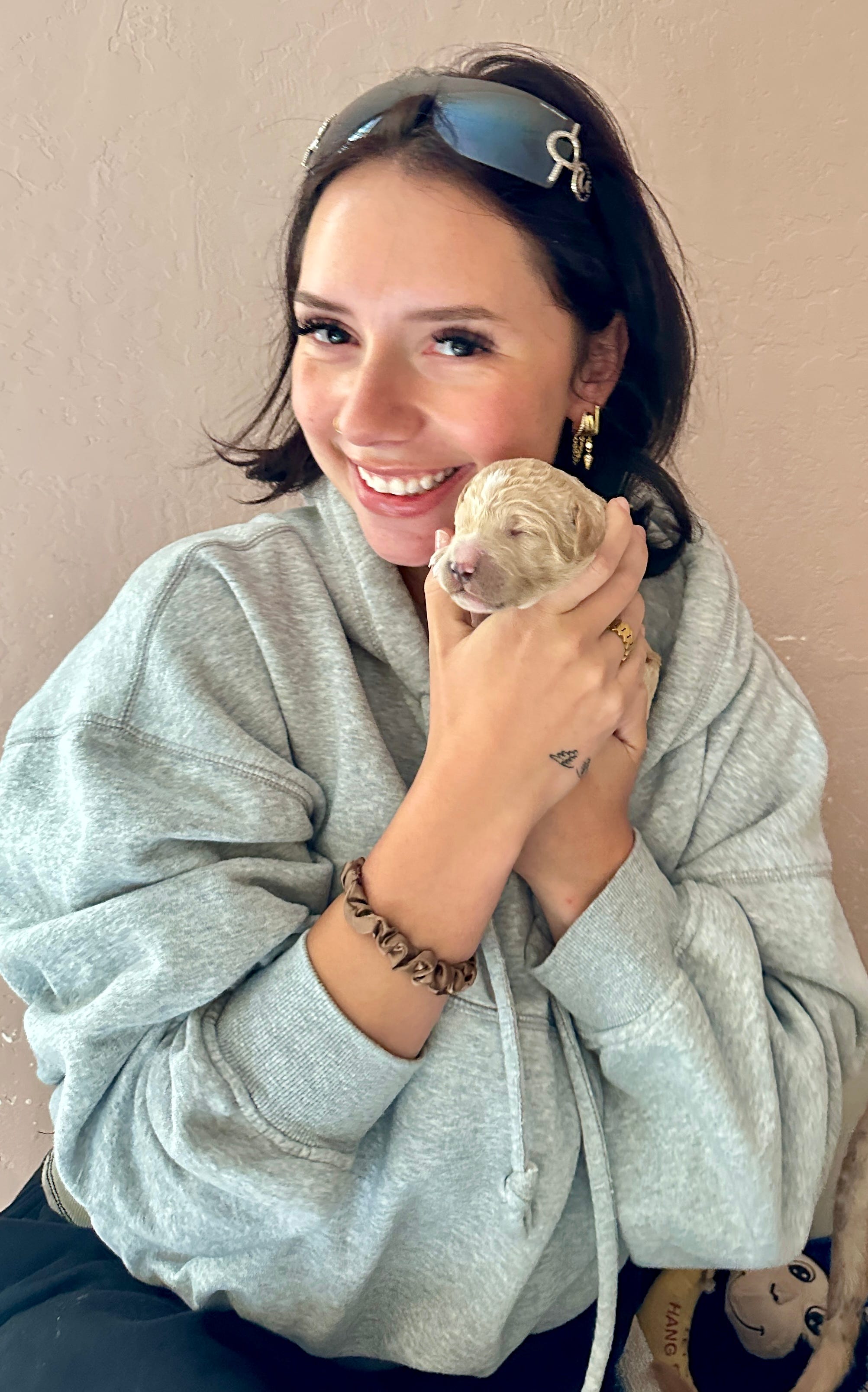
My dog eats a whole real food diet as well. Right now, she’s nursing six of the most adorable puppies on the planet.
Serenity’s hungry all the time. She gets as much healthy food as she wants. She’s also taken to eating at least one—but usually two—raw chicken drumsticks a day.
Before she got pregnant, she ate one to two meals a day. One meal I made her out of fresh raw ingredients and one I defrosted from pre-made raw pet food from one of several local butcher shops or the natural pet food store.
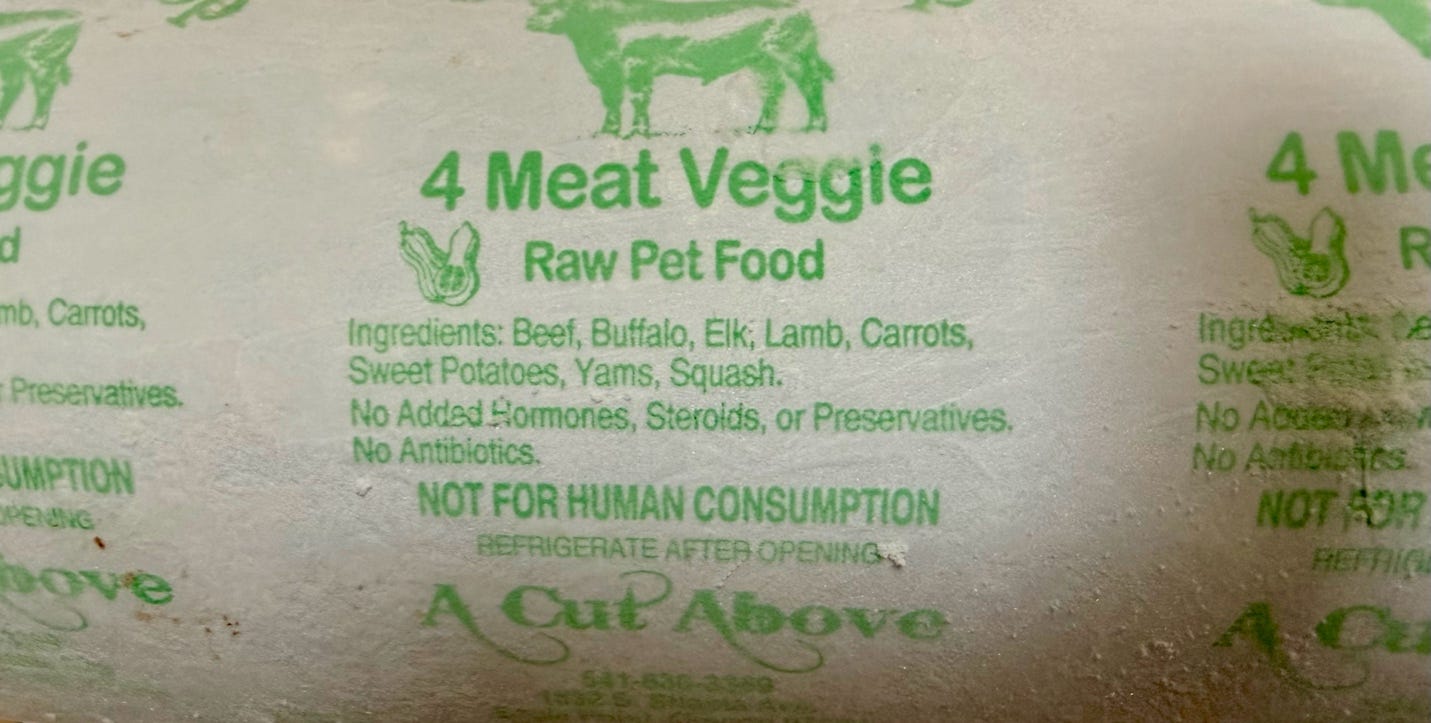
The bowl from scratch usually includes:
Trim from the butcher shop (beef, pork, or another animal protein) or chunks of raw chicken (her favorite)
A raw chicken foot or two
One or two raw chicken hearts. She especially loves these when they’re slightly rotten. Yummy.
A beef kidney
A raw duck or chicken egg.
A sprinkling of ground duck, chicken, or quail egg shell or half a crushed egg shell if I’m in a hurry.
A green vegetable. Serenity is partial to green tea leaves. I also give her asparagus, broccoli, lettuce, kale, celery, and/or whatever other green veggie we have on hand.
An orange vegetable. Usually grated carrot. Or a heaping teaspoon of pumpkin purée. Pumpkin hardens dogs’ stool so if your dog ever has diarrhea, mixing in some pumpkin will help.
A fruit of some kind. Blueberries or raspberries. My dog is not a fan of any fruits or anything sweet so she will pull the fruit out of the bowl and leave it on the ground. Other dogs love fruit. Slightly green bananas are especially good for dogs. And humans.
A splash of fermented cod liver oil.
A generous teaspoon of plain yogurt or another probiotic food like sauerkraut.
If you’re curious about what a less processed diet actually looks like for a dog, start small. Even one fresh meal a week is a step in the right direction.
The Forever Dog calls these “longevity toppers.”
The hardest thing about having an amazing four-legged furball in your life is that they don’t live as long as we humans do.
Though feeding your dog raw food may seem “difficult” or “inconvenient,” the few extra minutes it takes to assemble the ingredients is an investment in your puppy’s health and longevity.
And we all want our fur babies to lead long, healthy, happy lives.
If you made it this far (did you?), thanks for reading.
Love,
Jennifer
Related posts:
His Lipstick Isn’t Out Though
The Lipstick Diaries Continued
The Avocados Are Coming
The Avocados Have Arrived!
About the author:
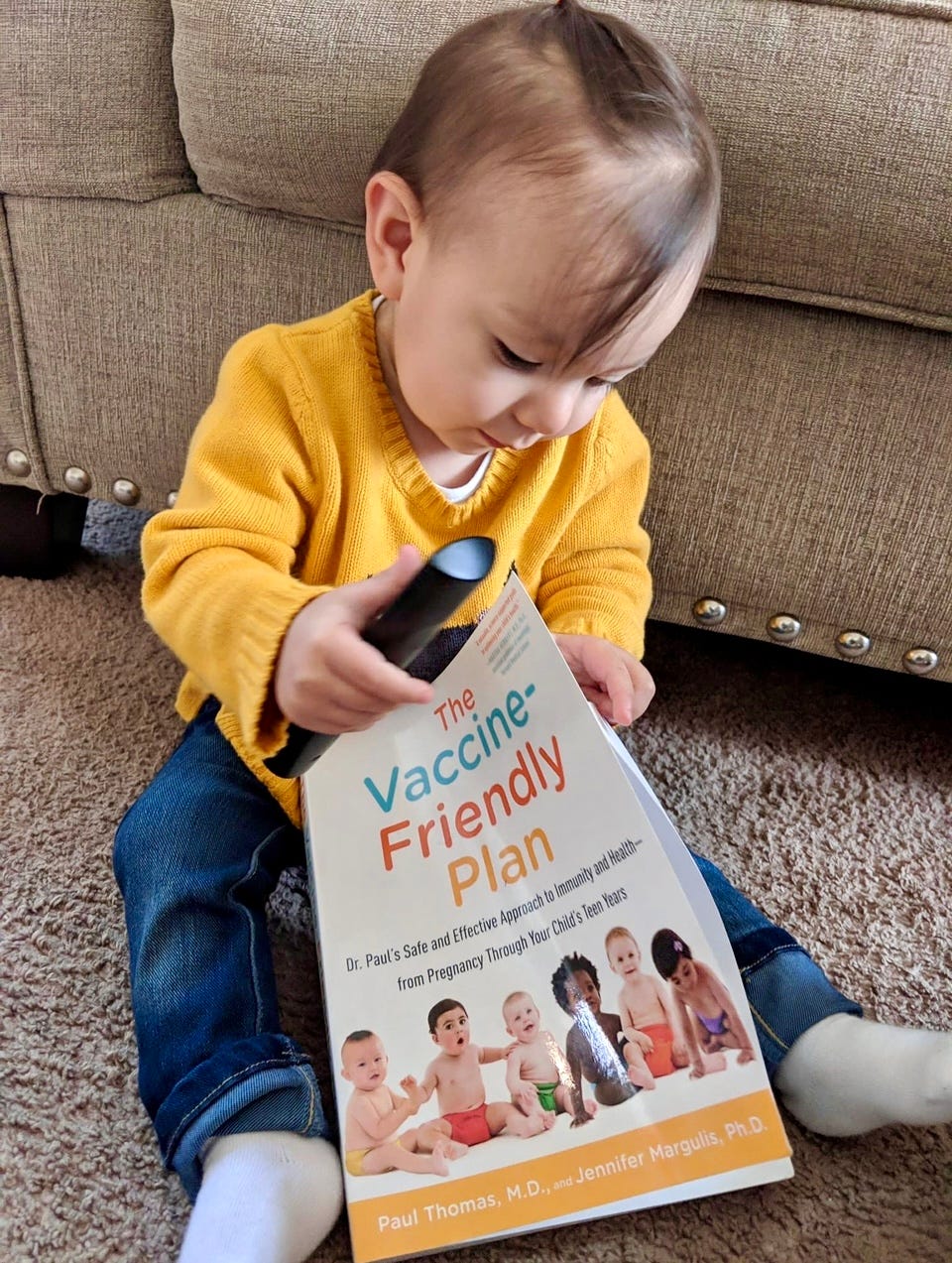
Jennifer Margulis, Ph.D., is an award-winning science journalist and book author. She’s the author of Your Baby, Your Way, and co-author, with Paul Thomas, M.D., of The Vaccine-Friendly Plan, neither of which have anything to do with dogs.
My 10 year old beloved dog was diagnosed with cancer - a malignant tumor. The vets wanted to operated and do chemo and radiation. I soul-searched ( and even called an animal intuitive in another state) and decided that I would not put him through that. I found a pet nutritionist in the middle part of the country - I am on the east coast - and she was AMAZING. She took him off all the what-I-thought-was-THE-best food he was on, changed his water ( only distilled), added this, subtracted this ( he was only allowed ONE kind of treat that I had to order). Within seven months the tumor was half the size and within 13 months, there was none. Two of my neighbors decided to call her and had success with things that were going on with their dogs as well. "NO kibble EVER," she said ( they were not on it anyway); no chicken!; no traditional dog chews. Our animals are getting cancer at alarming rates and living many years less than they did years back -they aren't here long enough to begin with!! My dog is now 13 and a half and runs like a puppy. She is an angel: she started working with animals when she was 14 and has helped countless people with their pets for a fraction of the cost I would have paid to the vet hospital. I called a university which has an ongoing research program to study cancer in dogs to tell them and they were "not interested." Cancer is big business not only in the human world, it seems.
I've told you in the past about Tio. My mixed breed Chihuahua Pomeranian. He lived to 19 years and 4 months. He always had a sensitive stomach and as a result we fed him three times a day, smaller meals. He was sort of a picky eater his whole, long, wonderful life. During the pandemic, the sourcing of the lamb in his dried kibble changed. It killed our other Chihuahua who had low grade kidney disease. She went full blown into kidney failure. Tio was floundering at the time too. He was 17, so you think it's age, right? Well the pet communicator I used at the time said it was the food. I switched him to human grade wet food. My husband tried it. It tasted like homemade beef stew, literally. He lived almost 2.5 years after that. We amended his food with sweet potatoes, honey, yogurt and olive oil. His health may have been best when we "Barbara Bushed" it (apparently Barbara Bush gave up medical care when she got to a certain age, or so my MIL told me). At age 17 we decided no more vet care. He never needed a vet visit in that time.
So food was life changing. He also had a full blown anaphylactic reaction to the leptospirosis vaccine at age 8 or so. He never received a vaccine after that except rabies (required by law which is dumb, he was never alone near a rabid animal!). And that's when I started thinking about the vax industry bin animals and humans. We give digs vaccines every year? I titre tested him for a couple of years and he always had antibodies. I refused vaccines after the reaction and logic and I intuition.
And Tio walked the beach 3 miles nearly every day of his life. Sometimes he walked 10-15 miles in NYC when we were on vacation. He also got plenty of vit D kayaking, boating, swimming, riding in antique convertibles. He lived his best life. I make it my goal to live like Tio! He seemed to have longevity figured out. And add napping and being pet a lot!
Sorry this is so long. Tio just has so much he taught me and continues to teach me.❤️