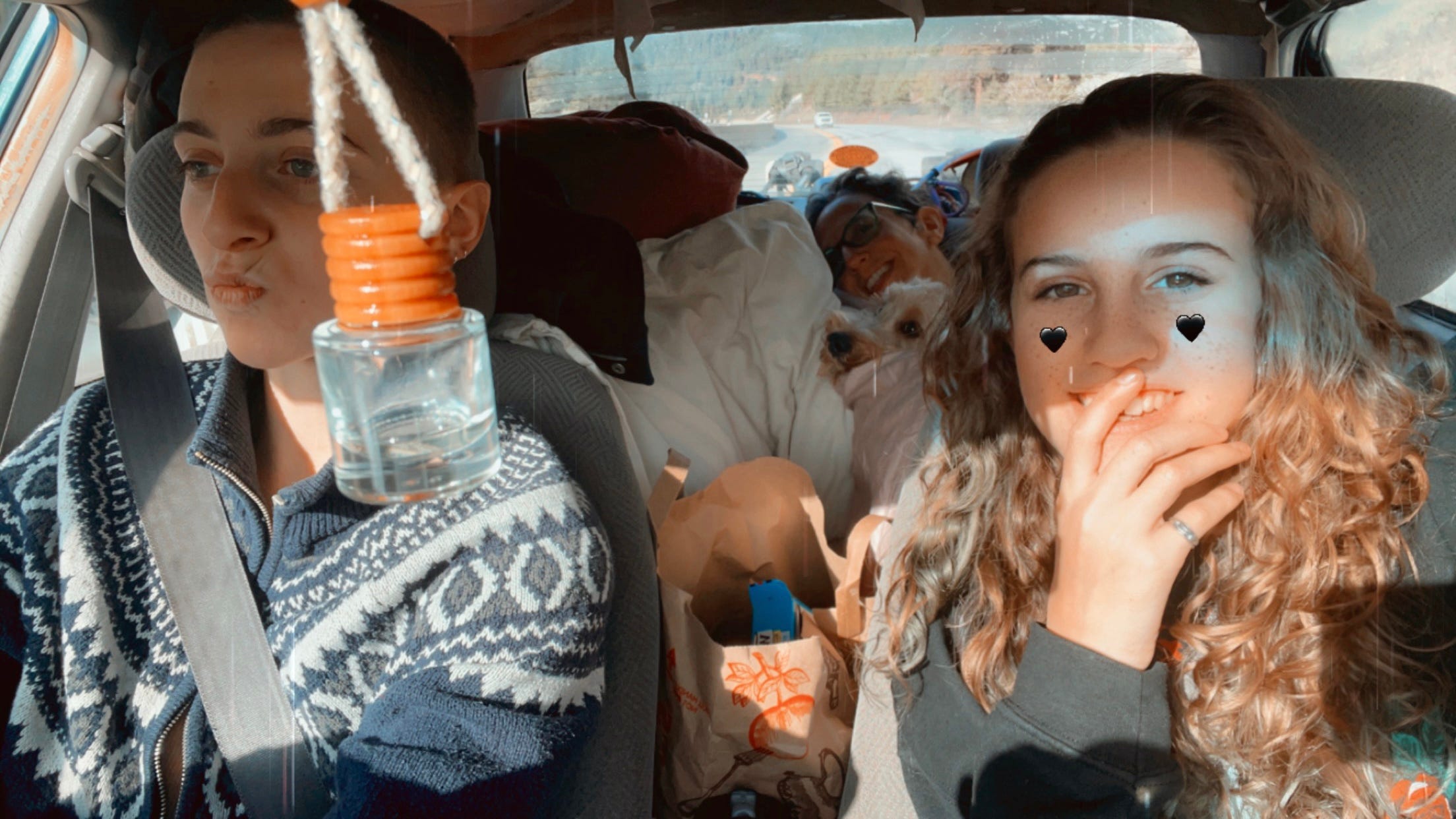
Last week my daughter packed a year’s worth of stuff into her over-20-year-old GeoPrism and hit the road.
Reason: New job in wildlife conservation.
Destination: Mississippi.
And because I’m a child of the 70s I can’t ever say the name of that state without sing spelling it. M-I-S-S-I-S-S-I-P-P-I.
I rode shotgun, miss-sized false eyeball oozing bloody discharge (I will get it resized as soon as possible), nausea from aforementioned miss-sized falsie, and all.
My youngest rode in the back.
Serenity came along too.
Eating healthy
I thought I ate well before I was diagnosed with cancer but after finding out that I had a tumor growing in my left eye, I radically improved my diet.
I started eating only whole organically grown foods, upping my intake of fresh vegetables and fruits, and cutting out all processed and fried foods, candy, and sugar-laden snacks.
But when you’re driving 3,000 miles on a budget and a timeline, it’s very hard to find healthy food.
We packed a bag of organic fresh groceries—snap peas, carrots, baby oranges, apples, cashews, almonds, plain yogurt, dried mango—and managed to eat through it in the first hour of our 4-day road trip.
After that, we mostly ate at gas stations along the route.
Get me a salad?
“You want something, Mom?”
“Yes, please. A salad.”
“Um, at this truck stop?”
“Ok, whatever. Any vegetables will do. If they don’t have any, buy me a piece of fruit.”
Inevitably the girls came out laughing and empty-handed.
“Mom wants a salad from the Chevron station,” I overheard one of them saying into the phone as she chowed down on a hotdog. “Ha, ha, ha, ha, ha, ha ha.”
One day Athena handed me a half-rotten banana. It cost $1.25. “This was the best-looking one,” she said apologetically. “That’s all they had.”
It’s hard to eat your vegetables when you’re driving across the country
I did get a pizza for $6.99 from a truck stop. The toppings were free. I ordered them all: olives, onions, jalapeño peppers, and banana peppers. I had two slices and the girls ate the rest. That was probably the “healthiest” meal we ate.
Much has been written about food deserts: urban areas where it’s nearly impossible to buy fresh food.
But feeding America healthy food is not just to insure public health. It’s also an issue of national security, according to Dr. Casey Means, M.D.
It seems to me that our entire country is something of a food desert. When you’re taking the southern route, Interstate 10, heading east anyway.
The exception that I know of is Sequential Biofuels off Interstate-5, on McVay Highway near Lane Community College in Eugene, Oregon. They serve up healthy, local, often organic food. I wouldn’t call their food affordable but it is delicious and some of it is nutritious.
So what do you do if you’re driving cross-country on a timeline and a budget and trying to maintain a healthful diet? Hoping y’all have some suggestions. My best advice is to stock up before you leave … and do a lot of fasting while you’re on the road.
Related articles:
Natural Treatments for Coronavirus That Actually Work
Tylenol Alternatives: Better, Safer Remedies
N=1, Now That I Have Ocular Melanoma, What Happens Next?

About the author: Jennifer Margulis, Ph.D., is an award-winning science journalist and book author. Support uncensored independent journalism by becoming a paid subscriber to Vibrant Life.


Dried chick peas. Organic beef jerky. Coconut milk mixed w Cocoa to feed the brain. Fasting is a great idea!! I detest those freeze dried veggies in noodle soup which I no longer consume but perhaps w broth & gas station hot water. FYI, my late MoM had a prosthetic glass eye. I would sometimes cover 1 eye to see what it was like for her. She was a Bad Ass Warrior. Never let anything/anyone get her down. LoVe fr Vancouver 🇨🇦
Consider bringing a range of homemade fermented veggies, e.g. sauerkraut, pickles, beets, honey garlic, and carrots with ginger. Even pumpkin is tasty.
Lactofermentation with salt water is user-friendly with a little experimentation and creativity -- for example, use a small water-filled jar in the neck of your fermentation vessel to hold the solids under the brine level.