
My family has just flitted off to the movies.
Me, I’m on puppy duty.
Plus the new Odyssey movie is nearly three-hours long. I have work in the morning and a lot to do to get the word out about the writing retreat I’ll be co-hosting in Tuscany this October.
Besides, I like to go to bed early and it feels like a rare treat to have the house to myself.
My sense of calm and well-being aside, a fascinating new study by researchers in Japan suggests that it would be better for my health and well-being for me to join my family in watching the recently released Greek epic.
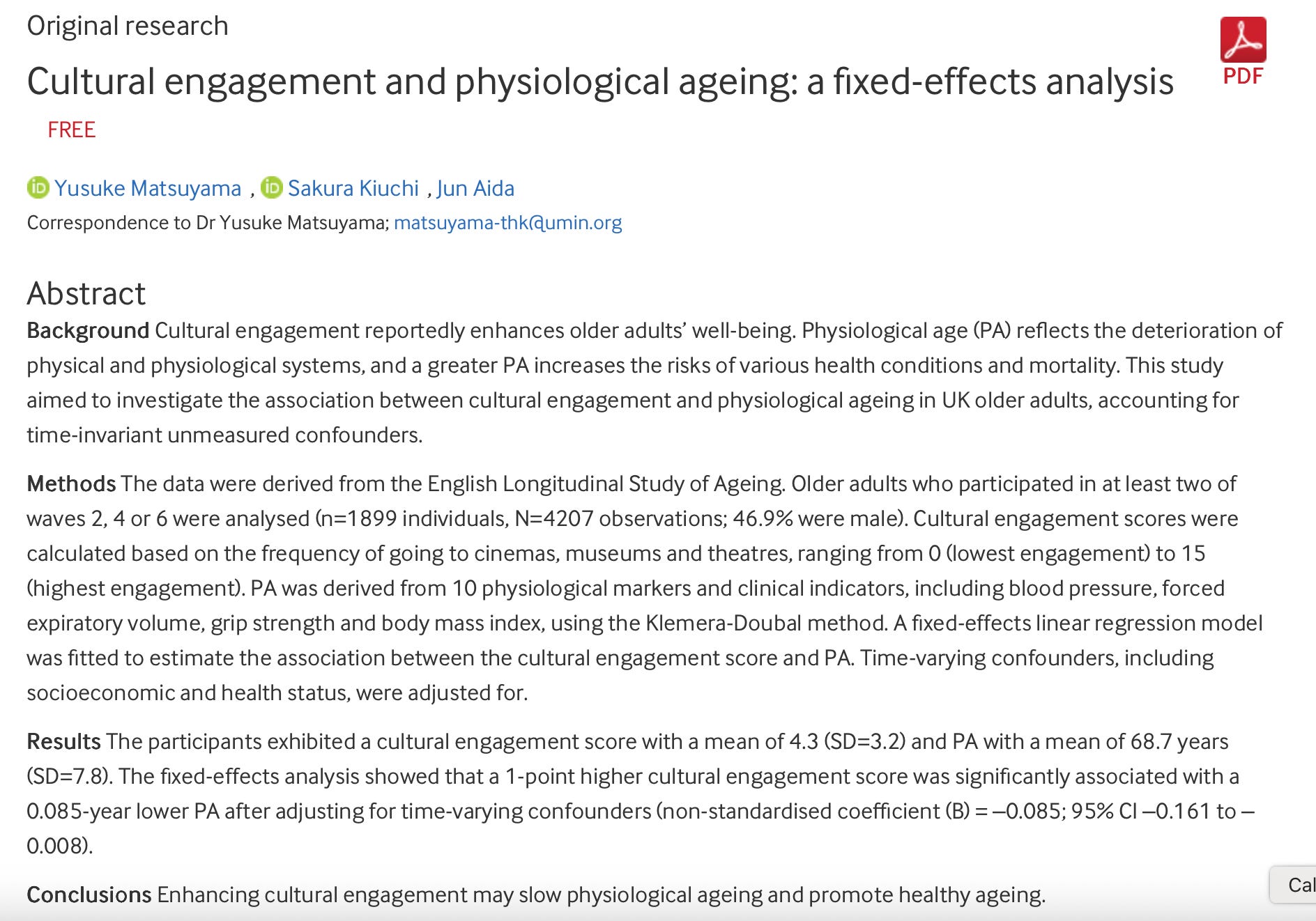
This new study, which was published in the Journal of Epidemiology & Community Health just five days ago, found that adults over 50 years old who stay culturally engaged are healthier—and biologically younger—than older adults who do not.
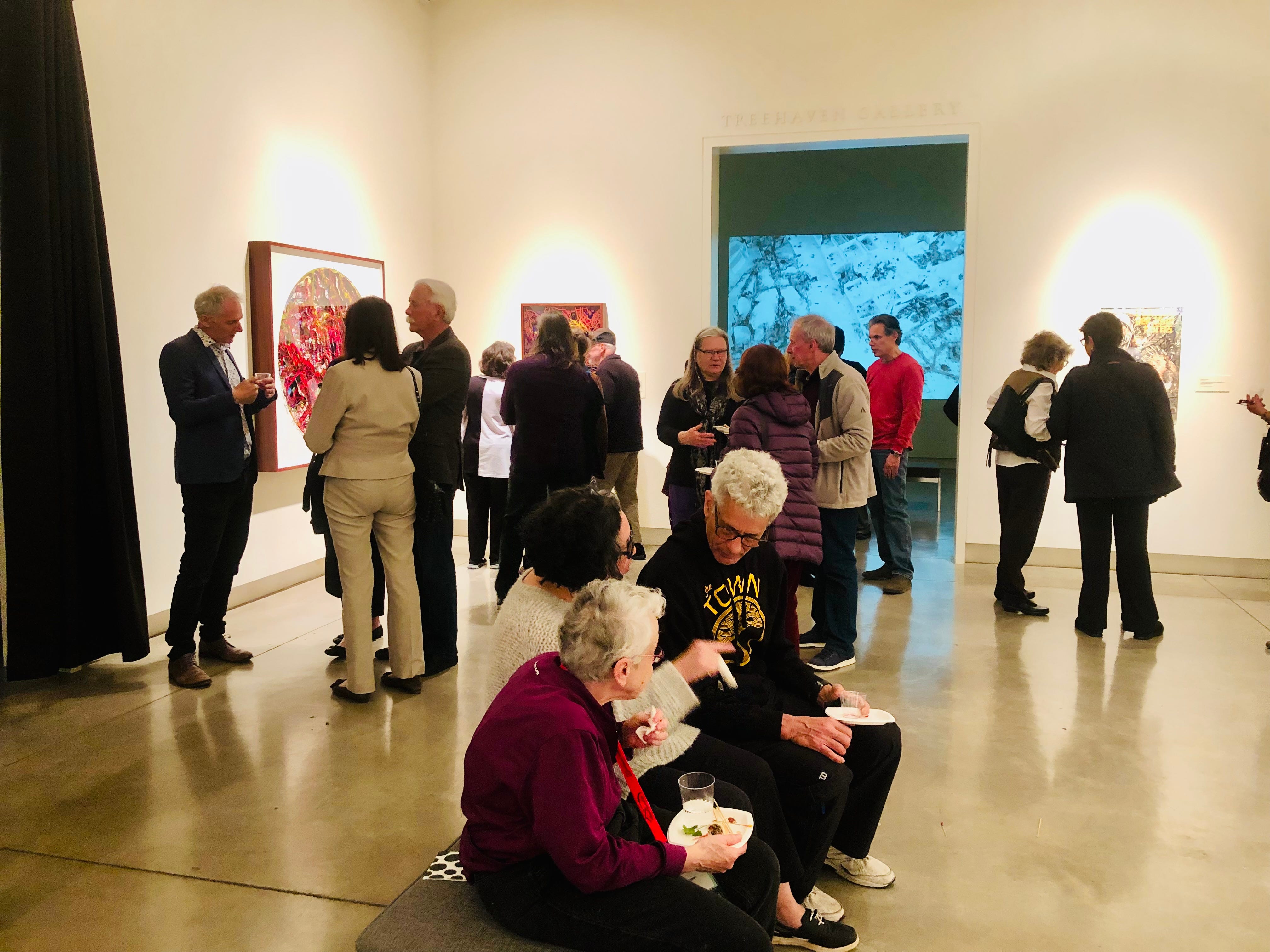
Activities like going to the movies, visiting art galleries, attending theater productions, or seeing an exhibit at a museum appear to help older adults live longer, healthier, physiologically younger lives.
You don’t have to be a busy bee every single day.
But this study found that adults who attended cultural activities at least once every other month shaved as much as three years off their aging clocks.
Cultural engagement in this study was based on how often people went to the movies, museums or art galleries, the theater, concerts, or opera.
Why would seeing a movie slow down your biological clock?
We need to socialize: There’s a growing body of scientific research that confirms that people—especially older adults—who engage in regular social activities experience less loneliness, less despair, and more well-being.
We humans need social interaction. In real life. (Leaving angry comments or heart emojis on social media posts doesn’t count.)
Attending art openings, visiting museums, and the like bring you in contact with other humans.
Those who enjoy culture eat better and are more physically active: In addition, according to the Japanese research team, people who engage in cultural activities tend to eat healthier food and be more physically active than people who don’t.
They cited a 2012 study of low-income adults in London that found that: “Arts participation was strongly associated with healthy eating, physical activity and positive mental well-being, with no evidence of confounding by socio-economic or sociodemographic factors.”
It improves our mental health: Those who spend time on cultural activities out in the world may also have younger biological clocks because these activities also improve mental health and lower stress levels.
The chicken or the egg?
So is it that participating in cultural activities causes you to age more slowly or is it that people who are healthier as they age tend to be more mobile, have more energy for socializing, and participate more in cultural activities?
This study doesn’t answer that question.
As someone who’s been struggling with a very difficult, rare, and unexpected health problem and who also loves all things art and many things music, I know how hard it can be to find the energy to go to cultural events, no matter how much you may want to.
Still, I find this study inspiring and I like the take-away: Book the ticket to that show you’ve been meaning to see. Show up for your friend’s art opening or author reading. Take yourself and a loved one to the movies. (Or go alone. That’s how my 75-year-old friend Dee met her third husband, walking out of a movie they were both attending solo.)
Close the computer. Get out more. Even if you don’t feel like it.
The puppies have finished nursing. They’re piled in a heap, quietly twitching in their sleep. Serenity is under my chair, resting. I’ll find out what everyone in the fam thought of the movie tomorrow. Right now, I’m going to bed.
Related posts:
What a Stranger in the Park Taught Me About Loneliness
Five Ways to Lose a Friend
Why False Hope is a Truly Good Thing
You couldn't go because you had caregiver duties. I'm the primary caregiver for my vax (childhood schedule) injured adult son. It's difficult to find substitute carers and even though I'd love the art or music it would be hard for him to participate. We try to stay connected and we are fortunate that he has an excellent day program (very rare and we had to move states to find it.) Chicken or egg? He is the gift. The "autism" is not.
As a GP for nearly fifty years I believe it’s the other way around. Those who are aging slowly particularly from a mental and emotional point of view are more socially aware and don’t shun the world , they are going to live a longer and better quality life. Young at heart is perhaps a genetic or life style result but very real.