

Tetracycline in a broad-spectrum antibiotic. First prescribed in the late 1940s, tetracycline became so popular that it was known as the “house-call antibiotic,” according to the late Dr. Robert S. Mendelsohn, M.D. In his book, Confessions of a Medical Heretic, Mendelsohn describes how it was given out like candy for a wide variety of infections in both children and adults.
Doctors loved prescribing this medication. After all, it was highly effective. And, they told their patients, the side effects were mild. Tetracycline was safe and effective, a perfect cure for bacterial infections.
But there was a rub.
Yellow-Green Teeth
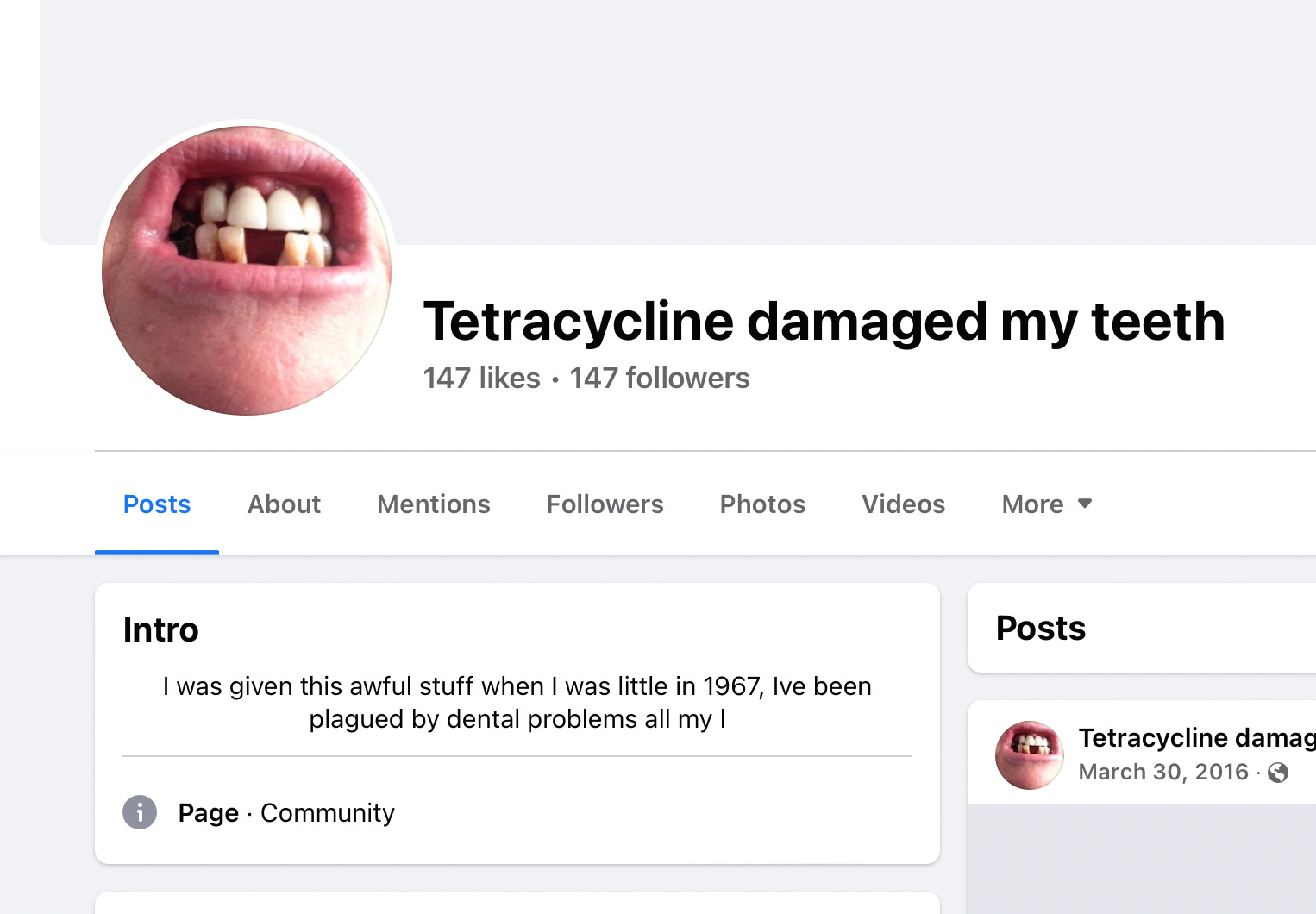
It turns out that when you prescribe tetracycline to a baby or small child whose teeth are still forming, it can permanently stain their teeth yellow, gray, yellow-gray, or even yellow-green.
Hundreds of thousands of parents watched this side effect unfold in their children’s mouths in real time. At first they gladly accepted the prescription for tetracycline, for, say, an ear infection or strep throat. But then they saw that their child’s teeth became discolored and brittle. Baby teeth fall out. But the ugly staining was often permanent.

Though doctors didn’t really understand the mechanism at the time, scientists later figured out that tetracyclines become incorporated into human tissue that is in the process of calcifying.
The tetracyclines actually deplete—or chelate—the calcium in these tissues. Only pirates want green teeth. But giving a child this kind of broad-spectrum antibiotic was not just an ugly and embarrassing side effect. It was also a health hazard.
Chelating calcium ions from the teeth, cartilage, and bone sometimes resulted in discoloration, calcium deficiencies, and other health problems for young people who were prescribed tetracycline. I have a friend who was born in Ireland when this antibiotic was still in widespread use. As a young man, his body was already hunched. He was only in his early twenties but he was wracked with constant pain. Martin told me that the doctors had told him that his bones were brittle and that he had an unusually painful form of early-onset arthritis of idiopathic origin.
A Spanish friend, who I met when I spent a semester abroad in Seville, was miserably self-conscious about her looks. Sofia always tried to smile with her mouth closed. She was a beautiful, healthy college student but she had a mouth full of gray-yellow teeth. Until she told me it was from the tetracycline she’d been prescribed as a child, I mistakenly believed her dental issues were a result of Spain’s subpar dental care and her own poor dental hygiene.
Tetracycline Only Affected 3 to 6% of People Prescribed It
We humans are all different. Our fingerprints are unique and our bodies react in different ways to medications, surgeries, and environmental toxicants.
As a team of dentists explain in a 2004 article in the International Journal of Dermatology, while the side effects of tetracyclines can be severe for some, others will not be noticeably affected by these antibiotics. As with all drugs, your reaction to tetracyclines depends on your individual susceptibility, the dose, the length and timing of exposure, and several other factors.
As the researchers state, the “permanent discoloration varies from yellow or gray to brown depending on the dose or the type of the drug received in relation to body weight. Minocycline hydrochloride, a semisynthetic derivative of tetracycline often used for the treatment of acne, has been shown to cause pigmentation of a variety of tissues including skin, thyroid, nails, sclera, teeth, conjunctiva and bone.”
They continue: “Adult-onset tooth discoloration following long-term ingestion of tetracycline and minocycline has also been reported. The remarkable side-effect of minocycline on the oral cavity is the singular occurrence of ‘black bones,’ ‘black or green roots,’ and blue-gray to gray hue darkening of the crowns of permanent teeth.”
But, according to this study anyway, the ugly staining only happened in about three to six percent of the children prescribed tetracyclines. What that means is that up to 97% of the children who were prescribed these drugs did not knowingly suffer from side effects.
The FDA Wakes Up
Nearly two decades after the problem was first noticed, the United States Food and Drug Administration finally realized that tetracyclines were dangerous to young children.
In 1970 they required a warning label to be added to the drug packaging.
According to Mendelsohn, the FDA label read:
“The use of drugs of the tetracycline class during tooth development (last half of pregnancy, infancy, and childhood to the age of eight years) may cause permanent discoloration of the teeth yellow-gray-brown. This adverse reaction is more common during long term use of the drugs, but has been observed following repeated short term courses. Malformation of tooth enamel has also been reported. Tetracycline, therefore, should not be used in this age group unless other drugs are not likely to be effective or are contraindicated.”
Five years later, in 1975, the American Academy of Pediatrics finally recommended against the use of tetracycline. According to Mendelsohn, by then the doctors in his profession who were paying attention had also woken up to the fact that, in addition to causing issues with the teeth, tetracyclines could damage a child’s liver, cause severe stomach aches and diarrhea, provoke vomiting, and lead to skin rashes and other health problems.
However, instead of embracing this information, apologizing to the families who had been harmed by these drugs, and finding alternatives to antibiotics, when the AAP first changed their recommendation about tetracycline, hundreds—perhaps even thousands—of pediatricians protested. At the time, they wrote outraged letters to the AAP, continued writing prescriptions for this dangerous class of drugs for small children, and refused to consider alternatives to these antibiotics. After all, how could their recommendations have caused their patients harm?
To this day, though literally thousands of peer-reviewed scientific articles have shown the dangers of the over and unnecessary prescription of antibiotics and myriad government regulatory agencies have been sounding the alarm about antibiotic resistance, medical doctors continue to over-prescribe them.
Lessons Learned From the Tetracycline Debacle
A medication prescribed during pregnancy or infancy can have long-lasting negative health consequences that may not show up for months or even years.
Medical doctors make mistakes.
When a doctor reassures you that something is “safe,” the doctor may be wrong.
You, not your doctor or Anthony Fauci, have to live with the health consequences of your doctor’s mistakes.
“Safe and effective” is a marketing phrase used with great aplomb by the pharmaceutical industry. When a doctor insists something is “safe and effective” he’s repeating a PR talking point. If he cannot back up this claim with science and many years of concrete clinical experience, it’s time to find a new doctor.
Many doctors will ignore the clinical data right in front of their faces because they care more about their egos than they do about the health and well-being of their patients.
If you decide to use a new medication, you are essentially a guinea pig. It might turn out for the best (tetracyclines are effective antibiotics and the CDC currently recommends them for tick-borne illnesses). But it might not.
So What Does All This Have to Do With “Vacations”?
Last week the CDC’s advisory committee voted unanimously to include COVID-19 vaccines on their immunization schedules for 2023. The vote was 15 in favor, zero opposed.
When I used the word “vacation” in the title of this post, it was so you could share it on other social media platforms, like Facebook and Twitter, without triggering the metasphere’s artificial intelligence.
As everyone who reads Substack is already aware, the censorship has been stunning of late. The word “vaccine” in the title of a post automatically triggers a Facebook warning. I’ve noticed that Facebook also cloaks these posts, limiting the number of people who see them. Facebook also hates Substack links, by the way, and will downgrade posts with a Substack URL. (You can usually get around this by using the free URL-shortening services offered by Bitly or TinyURL to generate a non-Substack link.)
So today I’m calling the COVID-19 vaccines “vacations.” In the past I’ve also referred to them as “vacuums” (used to vacuum up “the mess.”) But I was hauled off to Facebook jail for a month for using the word “vacuum” in place of the word “vaccine” and linking to a peer-reviewed science article that mentioned vaccine in the title.
Social media users have been posting the emoji for a carrot in place of a syringe. You can have a lot of fun with this if you call the vaccines “carrots” and COVID-19 “the hummus.” Try it. If you’re anything like me, you’ll crack yourself up.
But be sure to write out the word carrot and not use the emoji. It seems that humans are a lot smarter than robots, for the time being anyway, and a BBC tech writer outed the carrot emoji in a September 16, 2022 article with a great photo accompanying it. Users also say, the “cupcake,” the “juice,” the “jab,” the “jag,” and the “prick.” (You can have a lot of fun with this last one, for obvious reasons.)
That was all a very long aside. Forgive me.
Tetracycline. Diethylstilbestrol. Opioids. X-rays during pregnancy. Cocaine in teething products. Thalidomide. The point is that public health authorities and medical doctors have made many mistakes in recent medical history. They have often reassured patients that products are “safe,” when they are not. These false assurances have caused and continue to cause the unnecessary deaths of literally millions of patients. This isn’t something from the past. It’s something that is happening right now in real time.
Children are the most vulnerable. Their brains and bodies are still maturing. In the absence of clear and compelling safety data, doctors should not be recommending something that might cause our children harm. With the COVID-19 vaccines, unfortunately, there is a growing body of clear and compelling evidence that the COVID-19 vaccines are not safe for children or anyone else. Alarm bells are blaring, right, left, and center.
Doctors, you took an oath to first do no harm. So clean the wax out of your ears, stop being shills for Big Pharma, put on your grown-up panties, and admit that you were wrong.
Related articles:
Make These Two Changes and Never Use Antibiotics Again
Mice Given Antibiotics DIE of Viral Infection
What’s the Microbiome?
About the author:
Jennifer Margulis, Ph.D., is an award-winning science journalist and book author. A contributing writer at The Epoch Times, she has also published in the New York Times, The Washington Post, and on the cover of Smithsonian Magazine. She worked on a child survival campaign in Niger, West Africa; appeared live on prime-time television in Paris, France; and taught post-colonial literature to non-traditional students in inner city Atlanta, Georgia. She is also the author/editor of eight books. Support independent journalism by becoming a paid subscriber to Vibrant Life. The views expressed on this channel are hers alone and do not necessarily reflect the views of her employers.
Over 15 years ago, a lumbar spine surgery patient of mine had GREEN lamina bone. I sent it to pathology and had forgotten about the tooth discoloration from tetracycline. The patient’s age may have put her in the group with childhood tetracycline exposure. Although I sent the bone to pathology, I got no answer at the time. The patient healed well from her surgery, and the mystery of her green bones was not solved, but this story poses one possible answer. I don’t remember her dental status either.
Yes, now that you mention it, I do remember that Sofia’s teeth were slightly discolored (fellow study abroader). She was still the same smart ass regardless. lol
The same thing happened to my brother too. He’s almost 60. Almost a blotchiness. I wonder if whitening can do anything to improve it.